
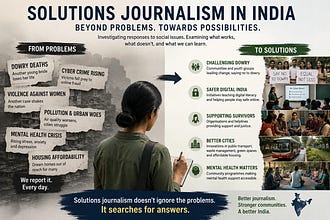
Reading the city differently: A Solutions Journalism Lesson
Monsoon Lessons (Urban Trees) - Why journalists should report urban trees as critical infrastructure rather than waiting for them to become headlines.

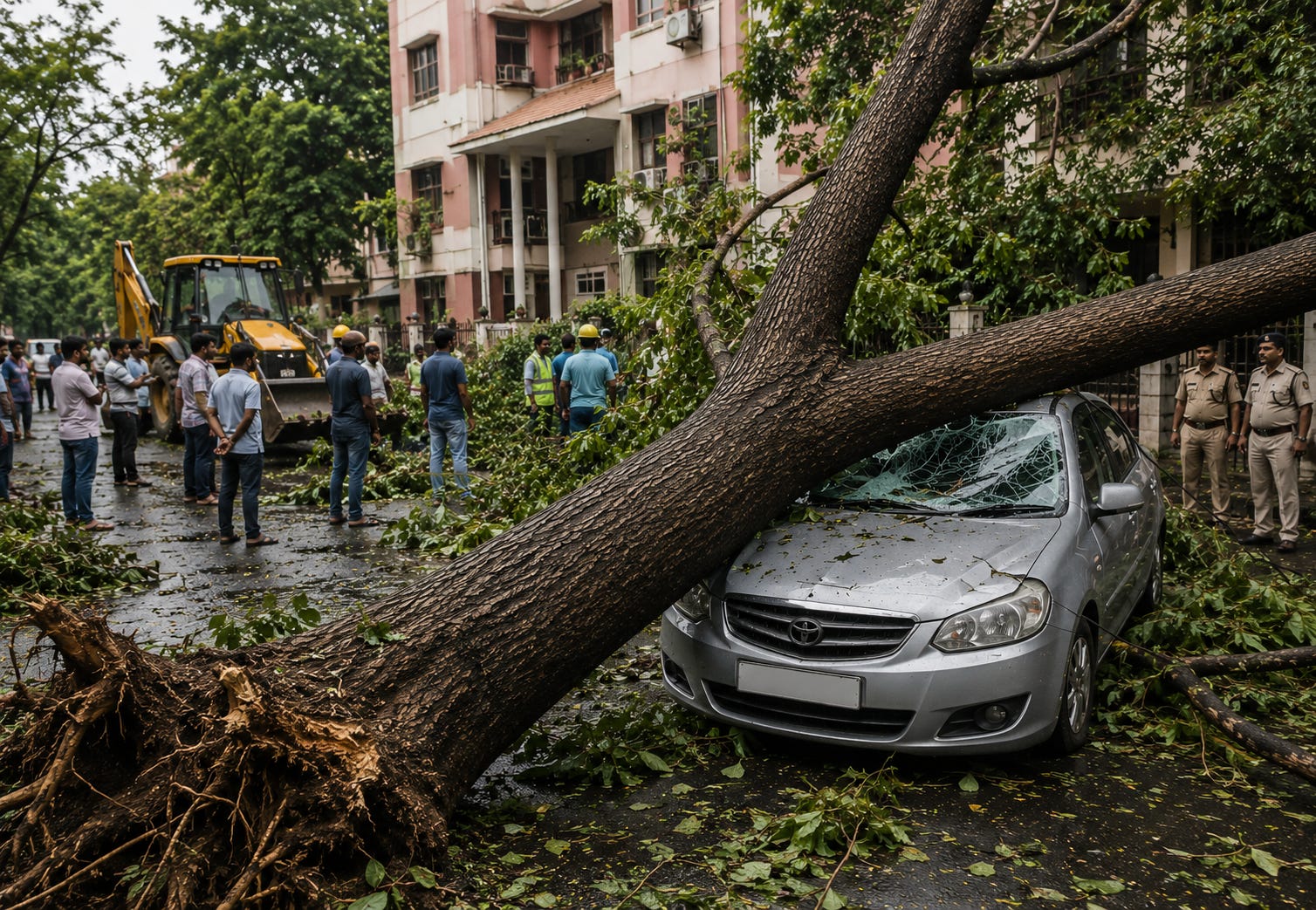
We often notice trees only when they fail us. When a branch crashes onto a moving vehicle and someone dies, when a century-old tree is felled for a road project, or when a storm uproots a giant that has stood quietly beside a busy road for decades, trees suddenly become news. Until then, they are simply part of the backdrop of city life—green, familiar and largely taken for granted.
An 11-year-old student lost his life and four others sustained injuries after a roadside peepal tree was uprooted and crashed onto a school bus in Chembur area of Mumbai on Tuesday afternoon, officials said.
Changing the question changes the story
Perhaps that is the problem. As journalists, we often report on trees only when they become a crisis. We cover the tragedy, the outrage and the inquiry. Then we move on. Solutions journalism encourages us to ask a different question: what if we started reporting on trees before they became headlines?
That shift changes everything. We continue to think of urban trees as landscaping rather than infrastructure. Roads are inspected. Bridges are monitored. Drains are desilted before the monsoon. Streetlights are repaired, and buildings undergo structural audits. We accept that these systems require regular investment because they keep a city functioning.
Trees deserve the same attention. They cool our neighbourhoods during increasingly severe heatwaves, improve air quality, absorb rainwater, support biodiversity and make our cities healthier and more liveable. In an era of climate change, they are no longer an aesthetic addition to the urban landscape; they are part of the infrastructure that helps cities withstand extreme weather.
Yet living infrastructure requires care. Unlike concrete, trees grow, age and respond to changes in their environment. Construction can damage their roots. Soil becomes compacted. Storms expose hidden weaknesses. Some species thrive in urban environments, while others become more vulnerable over time. Managing them requires expertise, regular assessment and long-term planning.
This is not an argument for removing more trees. Nor is it an argument for preserving every tree regardless of its condition. It is an argument for treating trees with the same seriousness we reserve for every other piece of public infrastructure.
Across the world, cities are beginning to rethink their relationship with urban forests. Digital tree inventories, scientific inspections, certified arborists and climate-responsive management are becoming as important as planting new saplings. The emphasis is shifting from reacting after storms to preventing avoidable failures before they occur.
That shift reflects a broader understanding of resilience. Climate resilience is often discussed in terms of flood barriers, drainage systems or renewable energy. But resilience also depends on quieter systems that shape everyday life: pavements that remain safe to walk on, public transport that continues to operate, parks that provide relief from extreme heat and trees that are healthy enough to withstand stronger storms.
The monsoon reminds us that cities are living systems. Rain tests not only our drains but also our planning, governance and preparedness. Every season reveals which parts of our urban infrastructure have been maintained—and which have been neglected.
Perhaps it is time we expanded our definition of infrastructure.
A mature roadside tree is not merely part of the city’s scenery. It is a public asset that delivers measurable environmental, economic and health benefits. Like any public asset, it requires investment, skilled management and regular care. For journalists, this is where the solutions journalism lens becomes valuable.
Instead of asking only What happened? or Who is responsible?, we can also ask:
Which cities are reducing tree-fall risks successfully?
What systems are working?
What evidence supports them?
Could those approaches be adapted here?
What barriers stand in the way?
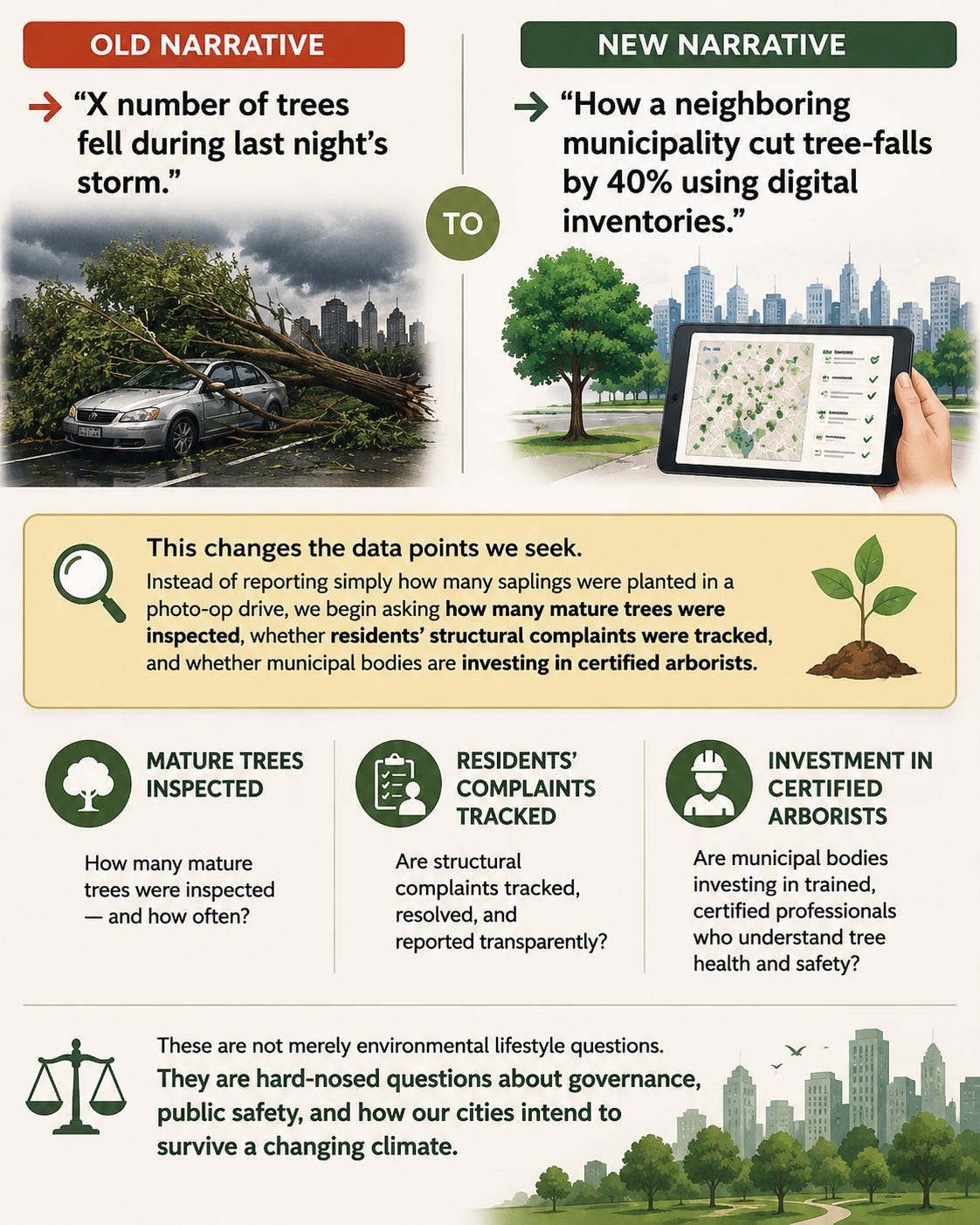
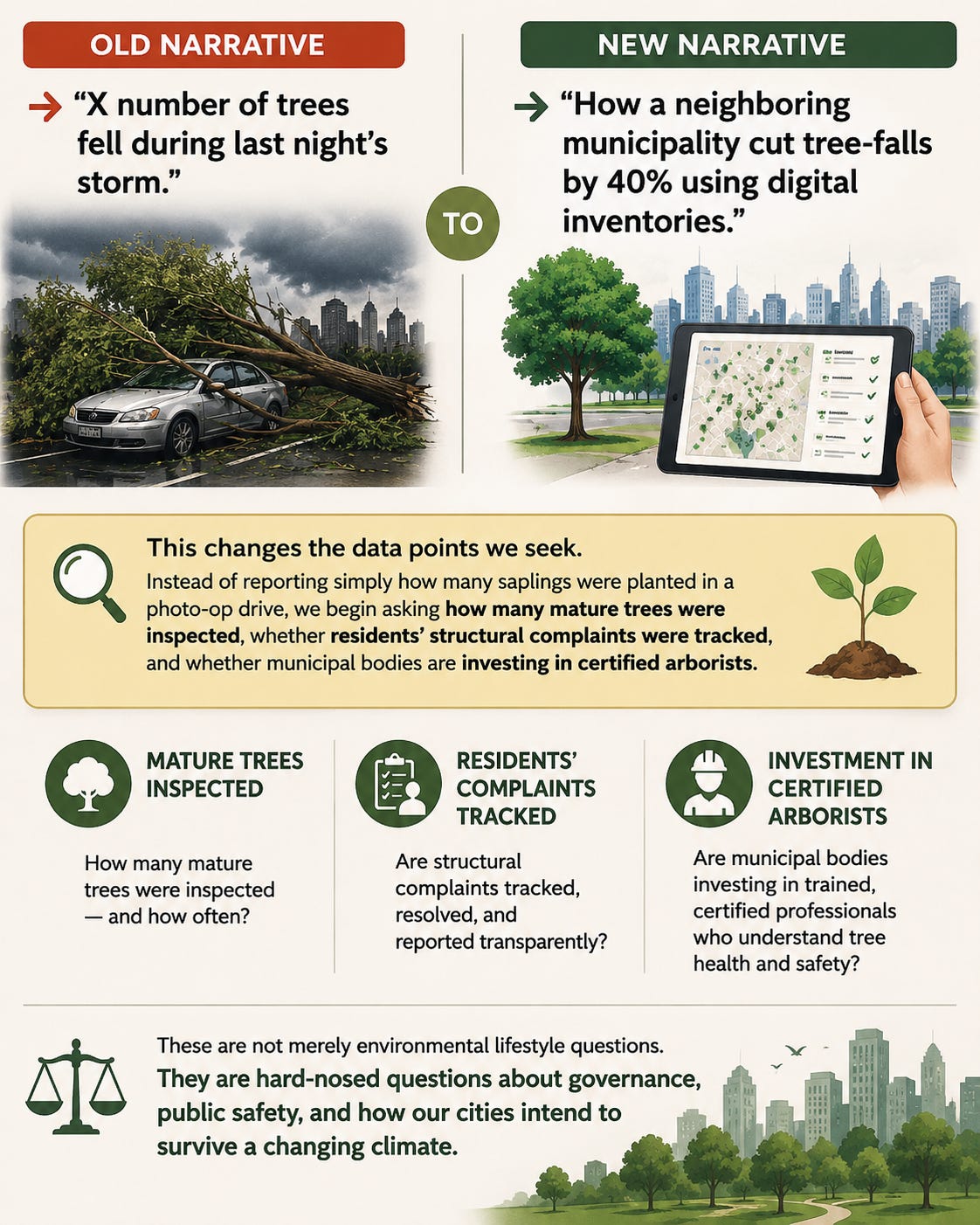
Those questions take us beyond the breaking news cycle and into the realm of public problem-solving. Seeing trees differently also changes the stories we tell.
Instead of reporting only how many trees were planted, we might ask how many were inspected, how many received professional care, whether residents’ complaints were acted upon, and whether cities are investing in the expertise needed to manage an ageing urban forest. These are not simply environmental questions. They are questions about governance, public safety and how cities prepare for a changing climate.
If we continue to think of trees simply as greenery, we will continue to notice them only when something goes wrong. If we begin to see them as infrastructure, we may finally start giving them—and the stories surrounding them—the attention they have quietly deserved all along.
Thank you for sharing this Vibha. Would also like to mention that footpath maintenance and "walkability" are also a big part of this tree crashes that keep occuring.